
Bay Area Council Economic Institute, April 2019, 42 pp.
“At the end of each year, the Bay Area Council surveys its members to determine which public policy areas are of the greatest concern to the region’s largest employers. In the Council’s 2017 survey, ending chronic homelessness emerged as a top public policy priority for the first time.
“This study, undertaken in cooperation with global consulting firm McKinsey & Company, aims to provide policymakers with new data and perspectives on how to solve what has become the defining moral challenge facing both the Bay Area region and California.
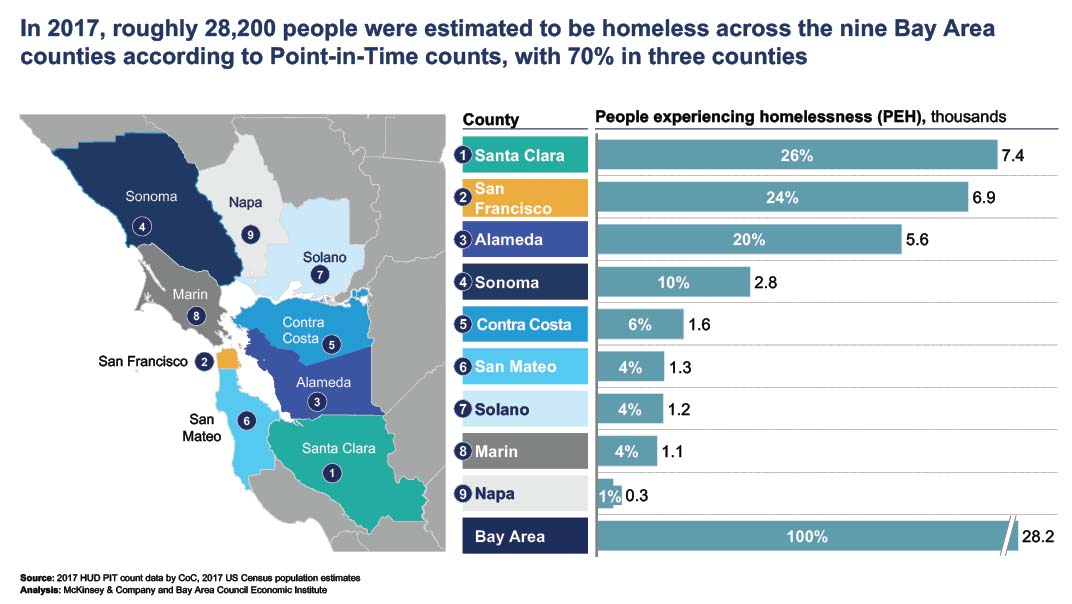 “Until very recently, homelessness was considered the problem of individual cities and counties. For a metropolitan region like the Bay Area, which is divided into nine counties and 101 cities, this approach fails to meet the needs of an intra-regionally mobile homeless population.
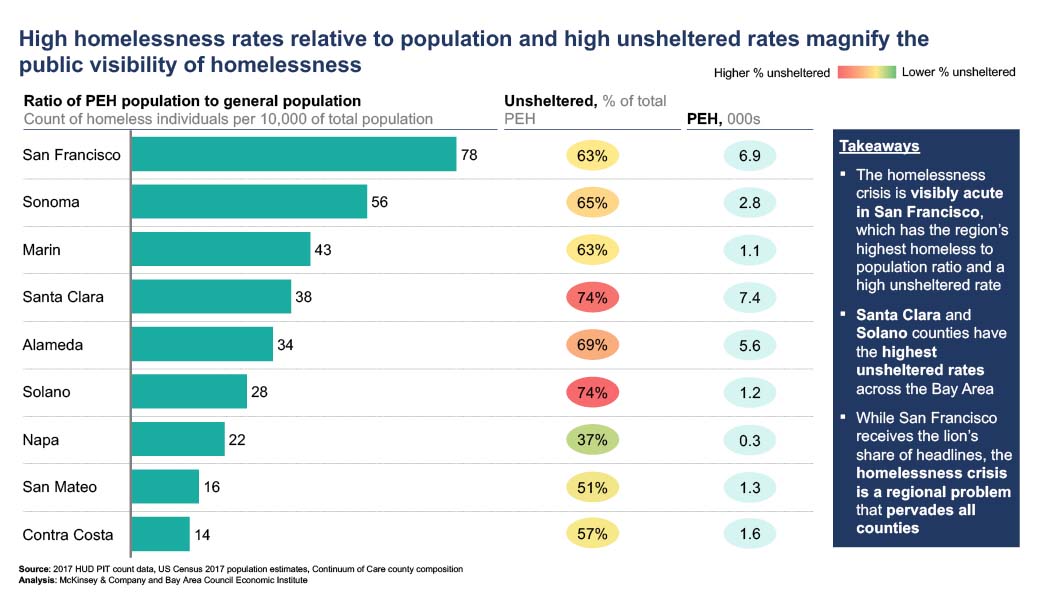 “In this report, a regional lens provides a new perspective on the homelessness crisis and offers new ways to address the problem.
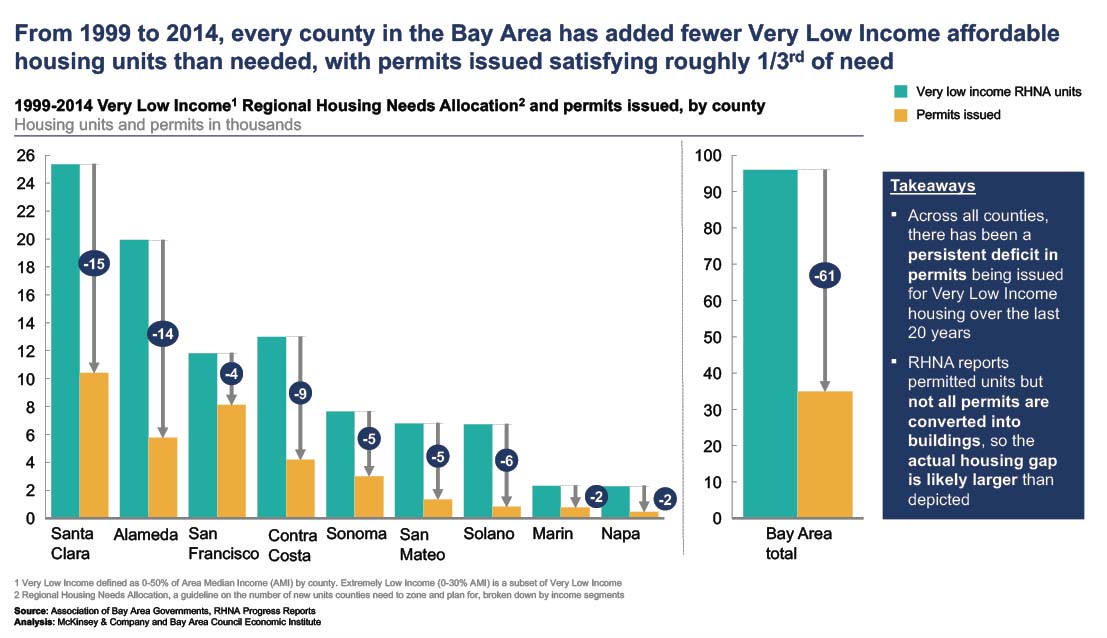 “California’s relatively recent industrial development and rapid and sustained population growth over the 20th century have deprived it of inheriting large stocks of abandoned workforce housing that older cities in the Midwest and East Coast have transformed into shelters and extremely low-income housing. Cities on the West Coast, including in the Bay Area, have no such redundant housing at their disposal.”
 Read the full report here