
Provided to Northern News by Cal Poly Prof. Vicente del Rio, PhD
Engendering Cities: Designing sustainable urban spaces for all, by Inés Sánchez Madariaga, PhD
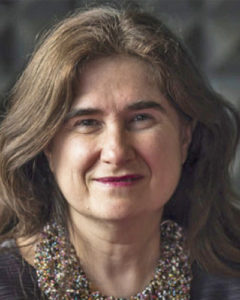 Inés Sánchez Madariaga, PhD, is an international planning expert with an impressive amount of professional and research experience. She has published widely, conducted numerous important projects, and held several positions at UNESCO, UN-Habitat, the European Union, and the Spanish national government. Her latest book (with Michael Neuman) is “Engendering Cities: Designing Sustainable Urban Spaces for All” (New York: Routledge, 2020). Link to Ines’s Global Urban Lecture for the UN-Habitat here.
See this presentation on YouTube here.
The urban land and affordable housing global crisis, by Geoffrey K. Payne
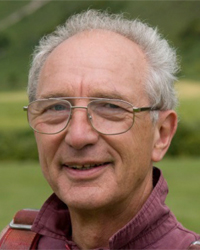 An architect and planner, Geoff specializes in urban land development and housing in developing countries. He has done consulting and research in several countries, and worked for several organizations including the World Bank, UN-Habitat, and the UK Department for International Development (DFID). Geoff has taught at the Development Planning Unit (DPU)–University College London, Oxford Brookes University, and others, including a week-long workshop at Cal Poly’s CRP in 2009. See Geoff Payne’s work here.
See this presentation on YouTube here.
Place marketing and destination branding, by João Freire
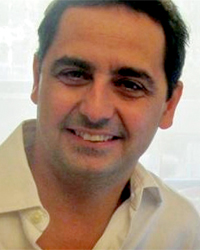 João Freire has a BA in economics and an MSc and PhD in marketing. He is a Professor at the Portuguese Institute of Marketing Administration (IPAM) in Lisbon. He has worked with clients from various continents, his research has appeared in several international publications, and he is a founding member of the International Place Branding Association. After years of quantitative and qualitative research, João has developed new ideas and unique methodologies for the construction of place brand identities — the focus of his current work.
See this presentation on YouTube here.
Sustainable urban design in a post Covid-19 era, by Kobus Mentz
 An architect with a master’s in urban design from Oxford Polytechnic, Kobus Mentz is one of Australasia’s leading urban thinkers. He has worked on over 600 projects in 80 towns and cities internationally and is often invited as a consultant or advisor to help teams unlock complex urban challenges. He is the director of Urbanismplus, a practice active in Australia, New Zealand, India, China, and the UK that is widely known for pioneering sustainability-based practices, through demonstration projects, research, publications, and new methodologies. Kobus is an adjunct professor in urban design, University of Auckland, New Zealand. See more of his work at www.urbanismplus.com