
A story of bikes, belonging, and better cities
By Tom Holub, founder of Totally Doable Consulting, February 23, 2026
I have lived car-free since 1990, when circumstances—a car breakdown with no money for repairs—led to me realizing that my life is better when I’m not driving. Since then, I have navigated the Bay Area using both my own two legs and the region’s disjointed transit system. It’s not always easy, but I prefer it to being in cars.
Out of necessity, I learned how to combine bike trips with other transit modes. I quickly realized that the multimodal combination of BART + bike is powerful. (Back in those days, the Bikes on BART program required a $3 permit, which was a card you’d have to show the station agent when entering the station). The combo allowed me to access not only to work and school but also beautiful countryside roads all over the Bay Area.
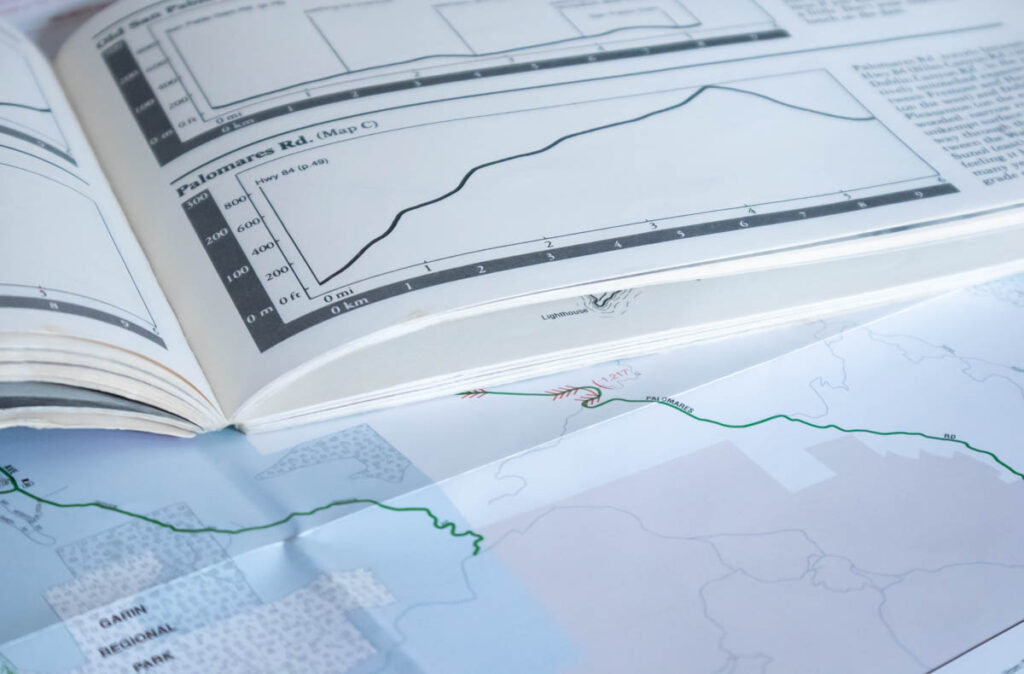
20 years prior to the launch of Strava, I found roads to explore by looking through the East Bay Bike Coalition’s “East of the Hills” and “West of the Hills” maps and Grant Petersen’s “Roads to Ride” books. I started to string together fun routes for cyclists of different abilities and to organize weekend rides for friends, mostly computer science students at UC Berkeley.
Soon, those routes went up on the then-newly-invented World Wide Web. (I can’t tell you exactly how old the site that became Bay Area Bike Rides is, but I have text content dating back to at least 1993. It predates the Internet Archive.)
The idea of the site was to promote the kinds of group rides I was leading, where people of different backgrounds could start out a ride together and choose their adventure along the way, either doing a quick 10-miler between BART stations or an epic climb up Mount Diablo.
Over the years, Bay Area Bike Rides has become an important resource for locals and tourists, gathering more than 23,000 unique visitors in 2025. It’s always been free and advertising-free. And, my personal ride series has developed a small community of lifelong cyclists. I have had the joy of having the children of couples who met on my rides back in the 1990s join the rides I’m leading now. We need more of that.
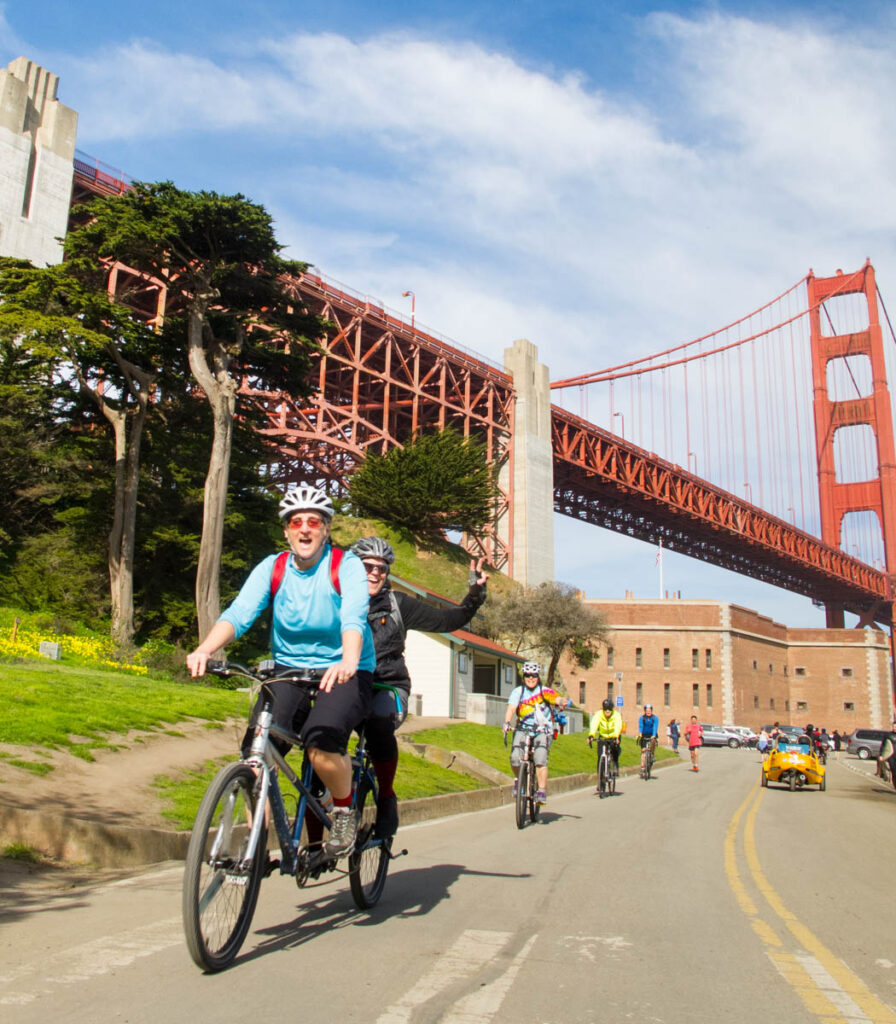
The Bike Lab
When my career pivoted out of technology into the Urban Studies program at UC Berkeley in 2015, my primary interest was in transportation, especially cycling. I want to get more people on bikes, so I researched predictors of cycling rates and discovered a study by Barnes and Krizek (2005), which found that metrics of cycling infrastructure mileage, median income, educational attainment, and other demographic measures are all poor predictors of cycling rates.
“None of the known factors, alone or together, can come close to explaining why people in some places are 10 or more times as likely to ride bikes as people in other places. Other attitudinal and possibly historical factors seem to dwarf the effects of the factors that planners and policymakers can control.”
This gap resonated with my experience of encouraging cycling via community actions. It seems important to change people’s attitudes about bicycling, so I decided to make that the focus of my thesis work. That led me to learn about the concept of mobility justice, a field led by authors such as Adonia Lugo (Bicycle/Race), Melody Hoffman (Bike Lanes Are White Lanes), John Stehlin (Cyclescapes of the Unequal City), and Steve Zavestoski and Julian Agyeman (Incomplete Streets). It’s been a fascinating journey, and you can read my thesis and my ongoing exploration of social issues using the bicycle as a tool on my Bike Lab website. (Or just check out the Instagram feed, mostly from local bike life, @oaklandbikelab).
I’ve come to believe that social factors related to cycling are under-researched and under-resourced. If infrastructure mileage explains less than 20% of the difference in cycling rates between different places, why are we spending 90% of our bike-related money on infrastructure? Surely there must be some low-hanging fruit in funding bicycle programs and supporting community bike organizations. That’s now the focus of my work.
The Original Scraper Bike Team
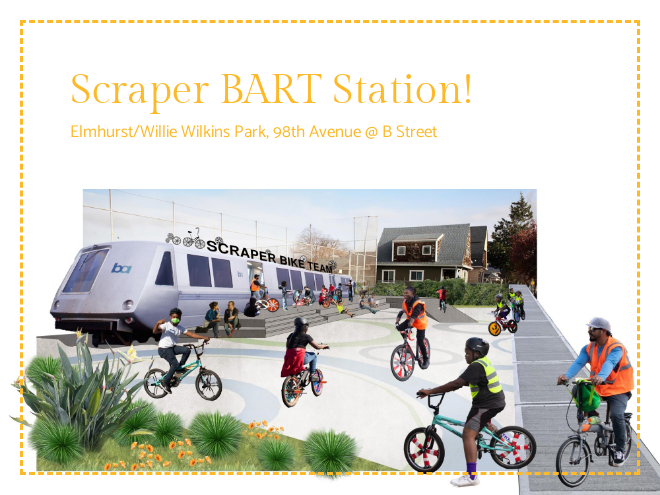
One of the organizations I’m working with is the Original Scraper Bike Team, a youth and community development organization in Deep East Oakland. Our big project right now is an ambitious plan to develop a community wellness center, bike shop and clubhouse, which will be located in a historic rail car we were awarded as part of BART’s legacy fleet program. In partnership with Roots Community Health and the Black Cultural Zone, the park will become a vibrant, iconic site in a neighborhood which currently has few safe places for kids to gather and grow together.
Major funding for the Scraper BART Wellness Center comes from the Bolger Foundation. If you’d like to support the project, I’m currently fundraising via Climate Ride. Permitting a project like this presents some special challenges; we’re receiving pro bono planning support from WRT and M-Group and can use more planning partners if your organization has capacity.
RICH CITY Rides
Richmond, California’s RICH CITY Rides uses the bicycle and other tools to support their belief that everyone residing in Richmond—especially Black, Brown, and Indigenous communities—deserves equitable access to safe, healthy, and vibrant neighborhoods. I’ve been working with RICH CITY for years and am currently providing long-range planning support to the creative projects that make up their RichPEP programs. (RichPEP is supported by the City of Richmond and the Hellman Foundation.)
Every city has someone who’s using the bicycle to do community work. But it’s not the only tool available. Important programs in the fields of art, dance, music, circus arts, bird watching, and many others are underway. Any of them would be a way to help make our cities better places. The bicycle is my tool; what’s yours?
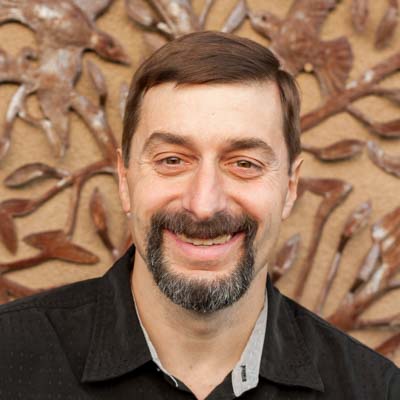
Tom Holub, Northern’s Technology Manager since 2018, until recently, is the founder and principal of Totally Doable Consulting, a strategic and technology firm serving nonprofits and the public sector. From 2000 to 2013, Holub was the Director of Computing for the College of Letters & Science, Dean’s Office, at UC Berkeley. He holds a B.A. in urban studies from UC Berkeley and lives in Oakland. Holub blogs on social issues related to urban cycling at https://bike-lab.org.